
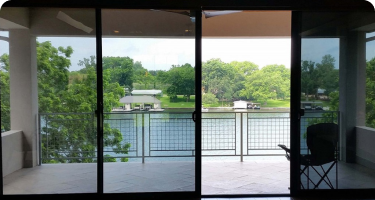
Residential Window Tinting
Find Verified Installers, Compare Film Types, Get Free Quotes
Find Verified Installers, Compare Film Types, Get Free Quotes
If you are searching for residential window tinting near you, TintingShops connects homeowners and renters with verified professional installers across all 50 states.
Unprotected home windows allow solar heat, UV radiation, and street-level visibility into the spaces where you spend most of your time, creating comfort, privacy, and energy problems that compound through every season.
This guide covers the full range of residential film types, room-by-room guidance, energy savings context, and what to expect from a professional home window film installation.
Tinting Benefits for Every Room in Your Home
Select a room to see exactly how residential window tinting improves comfort, privacy, and energy efficiency in that space. TintingShops connects homeowners across all 50 states with certified local installers ready to help.
Comfort and Furniture Protection All Year
Your living room gets the most sun exposure of any room in the house. Solar energy rejection technology helps cut down on cooling costs while protecting sofas, rugs, and hardwood floors from fading.
Get a Free Quote- Blocks up to 99% of UV rays that bleach furniture fabrics and flooring
- Solar energy rejection technology helps cut down on cooling costs
- Eliminates harsh glare on TV screens without blackout curtains
- Maintains natural light and outward views — no cave-like darkness
- Holds glass together during accidental impacts for added family safety
Better Sleep, More Privacy, Total Comfort
Bedrooms benefit most from privacy and light control. Dual reflective properties create an exterior mirrored effect to provide privacy while maintaining a clear view from inside — no need for heavy curtains or blinds.
Get a Free Quote- Dual reflective properties create an exterior mirrored effect for full daytime privacy
- Maintains a clear view from inside — see out without being seen
- Reduces early-morning glare for deeper, uninterrupted sleep
- Blocks UV rays that fade clothing, bedding, and carpet over time
- Frosted film options give a permanent privacy solution with clean aesthetics
Keep Your Kitchen Cool and Food Fresh
Kitchens run hot. Adding solar heat to an already warm cooking environment strains your AC and makes meal prep uncomfortable. Window film is one of the most cost-effective kitchen upgrades available.
Get a Free Quote- Significantly reduces heat buildup from south- and west-facing windows
- Cuts glare on countertops and stainless appliances during morning prep
- Protects cabinet finishes and countertop materials from UV discoloration
- Reduces load on refrigeration in rooms with high solar gain
- Easy-clean film surfaces resist steam and cooking splatter
Privacy Film That Looks as Good as It Works
Bathrooms need complete privacy without sacrificing natural light. Frosted or decorative films are a permanent alternative to blinds that warp in humidity or shower steam.
Get a Free Quote- Full privacy — blocks outside views completely while diffusing natural light
- Humidity-resistant film that won't warp, mold, or peel like blinds
- Decorative frosted patterns add a designer look at a fraction of the cost
- Easy to clean and maintain compared to fabric window treatments
- UV protection prevents grout, tiles, and finishes from discoloring
Focus Better, Work Longer, Eye Strain Gone
Screen glare is one of the top complaints in home offices. Solar control film cuts glare dramatically so you can work comfortably without rearranging your entire desk setup around the sun.
Get a Free Quote- Eliminates monitor glare without darkening the room or blocking your view
- Reduces eye strain during long work-from-home sessions
- Keeps the room at a consistent temperature for peak concentration
- Protects equipment, furniture, and floors from UV degradation
- Privacy options prevent passersby from seeing your screens or workspace
Use Your Sunroom All Year Without Overheating
Sunrooms are beautiful but often become unusable in summer due to intense heat. High-performance ceramic film can cut heat gain by up to 80%, transforming a seasonal room into a year-round living space.
Get a Free Quote- Reduces peak-summer heat gain by up to 80% with ceramic film
- Blocks 99% UV rays so plants, furniture, and flooring survive direct sun
- Makes the space comfortable for dining, reading, and entertaining
- Cuts cooling costs significantly — sunrooms are expensive to air-condition
- Maintains panoramic views — no curtains, shades, or blinds required
Why Homeowners Install Residential Window Film
Residential window film addresses four specific home living problems that standard glass cannot resolve on its own.
Each problem affects daily comfort, long-term property value, and monthly operating costs in ways that make professional window film one of the highest-return home improvement investments available without renovation.
Heat and Energy Costs
South and west-facing windows allow solar heat to enter the home continuously during peak afternoon hours, raising interior temperatures and increasing the runtime demand on air conditioning systems throughout summer. \n Solar control window film blocks a significant portion of this heat gain at the glass surface before it enters the room, producing more consistent interior temperatures and measurable reductions in monthly cooling costs across the film’s lifespan.
UV Protection and Fade Prevention
UV radiation passes through standard home glass on every day of the year, fading hardwood floors, bleaching upholstery, and degrading window treatments over years of accumulated exposure.\n Professional window film blocks up to 99% of ultraviolet radiation, significantly slowing the interior deterioration that reduces the home’s appearance and the value of furnishings, flooring, and artwork.
Privacy and Light Control
Ground-floor windows and street-facing rooms provide little privacy from pedestrian traffic during daylight hours without curtains or blinds that also eliminate natural light and outward views. \n Residential privacy film creates daytime privacy from the outside while maintaining a clear interior view, allowing natural light to remain in the room without the trade-off of full window coverage.
Security and Shatter Protection
Standard home glass breaks cleanly on impact and disperses shards that create injury risk from accidental breakage or forced entry attempts. \n Security window film holds glass together after impact, significantly slowing forced entry through ground-floor windows and reducing glass dispersal risk during accidental breakage.
Pick the Right Privacy Level for Your Home
Residential films range from barely-there solar control to near-complete privacy. Many options use dual reflective properties to create an exterior mirrored effect — providing privacy from the outside while maintaining a clear view from inside. Find the tint level that matches your lifestyle, and locate a certified installer near you through TintingShops.
Sheer
Solar ControlVirtually invisible film that blocks UV rays and a small amount of heat. Keeps your natural light and views completely intact. Best for rooms where aesthetics matter most.
Best for: Living rooms, dining areas
Light
Popular ChoiceSubtle tint that noticeably reduces glare and heat without darkening the room. Provides soft daytime privacy while maintaining excellent outward visibility.
Best for: Bedrooms, home offices
Medium
Best BalanceThe sweet spot for most homeowners. Strong daytime privacy, significant heat and glare reduction, and still enough light transmission to keep rooms feeling bright and open.
Best for: Sunrooms, street-facing rooms
Blackout
Max PrivacyNear-complete privacy film for bathrooms, ground-floor windows, or any room where total seclusion is needed. Still allows some diffused light, unlike solid coverings.
Best for: Bathrooms, ground-floor bedrooms
Save Up to 40% on Cooling Costs
Residential window film pays for itself. Homeowners across the country report measurable drops in monthly energy bills within the first summer after installation. Solar energy rejection technology helps cut down on cooling costs — and by reducing the strain on your air conditioner, window film can lengthen the life of your AC unit by up to 50%.
Average Monthly Energy Bill Comparison
* Estimates based on industry averages for a 1,800 sq ft home in a warm climate. Actual savings vary.
Residential Window Film Types
Different residential needs call for different film technologies. Understanding what each film type does — and where it performs best — helps you make the right choice for your home's specific requirements.
Solar Control Film
Most PopularSolar control film is the most widely installed residential film category, designed to block infrared heat and UV radiation while maintaining natural light transmission and outward views.
It reduces cooling costs, protects furnishings from UV fading, and eliminates harsh glare on screens and reflective surfaces throughout the home. In a general sense, solar control films vary significantly in heat rejection performance depending on the technology and manufacturer used.
Advanced solar control options, such as those made by HITEK Films, are engineered for long-term heat rejection consistency without color shift or optical degradation over time.
Best for: South/west-facing windows, sunrooms, living areas
Privacy and Dual Reflective Film
Daytime PrivacyPrivacy and dual reflective film uses high exterior reflectivity to prevent outside viewers from seeing into the room during daylight hours while maintaining a clear interior view for occupants.
It is the primary recommendation for ground-floor bedrooms, living rooms on busy streets, and any residential space where daytime privacy from pedestrian or road-level visibility is an ongoing concern without the use of curtains or blinds.
Best for: Ground-floor bedrooms, street-facing rooms, living rooms
Frosted and Decorative Film
Full PrivacyFrosted film provides full privacy by diffusing light rather than blocking it, creating a soft, natural illumination inside the room without any exterior visibility through the glass.
It is the standard recommendation for bathroom windows, interior glass partitions, and any room where complete privacy is required alongside light diffusion.
Decorative film options extend this category to include custom patterns, gradient bands, and branded graphics for homes where aesthetics drive the film selection alongside privacy performance.
Best for: Bathrooms, interior partitions, front doors
Blackout Film
Total DarknessBlackout film eliminates all visible light transmission, providing complete privacy and full light exclusion for rooms where total darkness or complete exterior opacity is required.
It is most commonly used for ground-floor bedrooms, basement units, darkrooms, and any residential space where external light and street-level visibility are both unwanted simultaneously.
Best for: Bedrooms, basements, media rooms, darkrooms
Security Film
Break-In DeterrentSecurity film is a thick polyester construction applied to the interior glass surface that holds shattered glass in place after impact.
It does not prevent glass from breaking but significantly slows forced entry through ground-floor windows and reduces injury risk from glass dispersal during accidental breakage.
It is optically clear and produces no visible change to the window's appearance, making it the appropriate choice for homeowners who want break-in deterrence without affecting the home's aesthetic.
Best for: Ground-floor windows, entryways, sliding doors
A certified installer will assess your windows and recommend the right film type for each room.
Which Film Is Right for Your Home?
The right residential film depends on the specific problem the homeowner is trying to solve and the room configuration involved.
Heat & Energy Cost Reduction
Homeowners motivated primarily by heat and energy cost reduction should prioritize solar control film on south and west-facing windows where solar gain is most concentrated during peak afternoon hours.
Recommended: Solar Control Film
Daytime Privacy with Views
Homeowners who want daytime privacy without sacrificing natural light or outward views should consider dual reflective or light-tinted solar film that achieves privacy through reflectivity rather than opacity.
Recommended: Dual Reflective Film
Full Privacy Required
Homeowners who need full privacy regardless of light transmission should evaluate frosted film for diffused-light applications or blackout film where complete light exclusion is required.
Recommended: Frosted or Blackout Film
Security & Break-In Deterrence
Homeowners with ground-floor glass in areas where property crime is a concern should consider security-clear film, which delivers break-in deterrence without any visible change to the window or the home's exterior appearance.
Recommended: Security Film
Room-by-Room Film Guide
Different rooms present different challenges. Here's what works best in each space.
Living Room and Common Areas
Living rooms with south or west-facing windows benefit most from solar control film that reduces afternoon heat gain and eliminates screen glare without curtains or treatments that block the natural light and exterior views that make the space livable.
UV protection in living room applications also preserves hardwood floors, area rugs, and upholstered furniture from the fading that accumulates over years of direct sun exposure through unprotected glass.
Bedroom and Bathroom
Bedrooms benefit from dual reflective film that provides daytime privacy from street level while maintaining a clear interior view, combined with blackout options for rooms where early morning light control affects sleep quality.
Bathrooms require complete privacy alongside light diffusion, making frosted film the standard recommendation over blinds or curtains that warp in humidity and require regular replacement.
Home Office
Home office windows facing east or west create screen glare and temperature inconsistency during the working day that reduces usability of the workspace for significant portions of peak light hours.
Solar control or dual reflective film addresses both the glare and the heat problem without requiring desk relocation or permanent changes to the window configuration.
Sunroom and Kitchen
Sunrooms are among the highest-priority film applications in any home because their extensive glass coverage allows solar heat to accumulate rapidly during summer, making the space uncomfortable and expensive to cool.
High-performance ceramic film reduces peak-summer heat gain significantly, transforming an unused seasonal space into a year-round living area. Kitchens with south-facing windows benefit from solar control film that reduces heat buildup during cooking hours and cuts glare on countertop and appliance surfaces during morning preparation.
Energy Savings
A home with south-facing living room windows and limited exterior shade can reach uncomfortable interior temperatures by early afternoon during summer without window film, forcing air conditioning to compensate for the continuous solar heat gain that standard glass allows through unchecked.
Solar control film reduces this heat gain at the glass surface before it enters the room, lowering the cooling load that the AC system must address during peak hours.
The result is more consistent interior temperatures throughout the day, reduced AC runtime, and monthly energy bill savings that compound over the film's lifespan.
Homeowners across warm and mixed climates consistently report measurable drops in summer cooling costs within the first season after installation, with the film paying for itself through energy savings over a multi-year horizon without any ongoing maintenance costs.
Energy Impact Summary
Window Film vs Window Replacement
Window Film
- ✓ Fraction of the installation cost
- ✓ No construction disruption
- ✓ No structural modification required
- ✓ Installed in hours, not days
- ✓ Comparable UV and heat rejection
Window Replacement
- − Significantly higher cost
- − Construction disruption required
- − Structural modification needed
- − Extended installation downtime
- − Best when windows are structurally compromised
For homeowners whose windows are structurally sound but thermally insufficient or inadequate for privacy, film is the most cost-effective upgrade path available.
In a general sense, the performance difference between a high-quality solar control film and a new energy-efficient window is narrower than most homeowners expect, particularly for UV protection and heat rejection in south-facing applications.
Advanced film options, such as those made by HITEK Films, are engineered to deliver long-term solar control and UV performance that competes directly with replacement window specifications at a significantly lower total investment.
Compatibility
(Double-Pane and Low-E Windows)
Thermal Stress Considerations
Certain dark or highly absorptive films can trap heat in the glass cavity of double-glazed units, creating thermal stress that may cause glass fractures over time.
This is not a universal risk, but it is a real consideration for homeowners with double-pane or low-E windows who are evaluating darker film options.
A qualified installer assesses existing glass type and window construction before recommending a film, and will select a compatible film for double-pane or low-E configurations where darker films would create compatibility risk.
Residential Installation
The Installation Process
A qualified installer assesses each window, confirms glass compatibility, recommends the appropriate film for each room's orientation and use case, and applies the film to the interior glass surface with precision-cut patterns matched to each window's exact dimensions.
Curing Period and Post-Installation Care
Residential window film is applied with a water-based adhesive that takes several weeks to fully cure.
During this period, a slight hazy appearance is normal and will clear completely as the adhesive bonds to the glass. Avoid cleaning windows or pressing on the film surface during curing.
After full cure, use only ammonia-free cleaning products on tinted glass surfaces, as ammonia degrades window film adhesive over time regardless of film tier or manufacturer.
Why Use TintingShops to Find a Residential Installer
Allowing a professional into the home to perform an installation is a personal trust decision that residential buyers weigh more carefully than commercial or automotive buyers.
TintingShops lists verified residential window film installers across all 50 states, with every shop vetted for professional credentials, film quality standards, and customer review performance before being accepted into the directory.
Find a Verified Residential Window Tinting Installer Near You
Professional residential window film delivers measurable improvements in home comfort, privacy, energy efficiency, and interior preservation in a single installation backed by a manufacturer warranty.
The film type and installer quality you choose determines the performance you receive for years after the installation is complete.
TintingShops connects homeowners with verified professional installers across every state, making it straightforward to compare options, read reviews, and request a free quote without commitment.
Get a Free, No-Obligation QuoteUse the search tool above to find verified residential window tinting near you and connect with a certified installer in your area today.
Everything You Gain with Residential Window Film
One installation delivers six measurable improvements to your home — no renovations required. TintingShops connects homeowners nationwide with professional installers who use proven, high-performance film technology.
UV Protection
Blocks 99% of UV radiation that fades floors, furniture, and artwork. Protects your family from harmful rays indoors.
Energy Savings
Solar energy rejection technology helps cut down on cooling costs and can lengthen the life of your AC unit by up to 50% by reducing strain on the system year-round.
Privacy
Dual reflective properties create an exterior mirrored effect to provide privacy while maintaining a clear view from inside — no curtains needed.
Glare Reduction
Removes harsh reflections from screens, countertops, and shiny surfaces — making every room easier to live and work in.
Fade Prevention
UV and infrared blocking preserves the original colour of hardwood floors, upholstery, drapes, and wall art for decades.
Safety & Security
Blocks intrusion, contains shattered glass, and deters theft. Thin polyester construction applied to the interior surface keeps broken glass in place during impacts, storms, or break-in attempts.
How It Works
From first enquiry to finished installation, the whole process is straightforward, clean, and typically done in a single visit. TintingShops makes it easy to find a certified professional in your area — no matter where you are in the country.
Free Consultation
A specialist visits your home, assesses your windows, and recommends the right film for your goals — heat rejection, privacy, UV, or safety.
Professional Installation
A certified installer applies thin polyester construction film to the interior surface of your windows with precision cutting and no mess. Interior installation means no exterior scaffolding needed — most homes are fully done in under a day.
Enjoy Your Home
Within 30 days the film fully cures. Your home is cooler, more private, and more comfortable — with a warranty that lasts for years.
No obligation. Connect with a certified installer in your area — available across all 50 states.
Frequently Asked Questions
Everything homeowners across the country ask before booking their residential window tinting installation.
Find Residential Window Tinting Shops Near You
Compare prices from top-rated shops near you. It only takes a minute to request your free, no-obligation quote.