
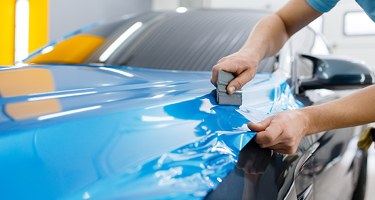
What Vinyl Wrap Is and Why Reversibility Matters
Vinyl wrap is a pressure-sensitive adhesive film applied to the vehicle’s exterior surfaces to change its color, finish, or graphic appearance. Unlike paint, it can be professionally removed at any time without damaging the factory paint beneath, returning the vehicle to its original factory finish.
This makes the appropriate choice for leased vehicles where permanent modifications are prohibited, new vehicles where preserving the factory paint for resale is a priority, and any owner who wants flexibility to change the vehicle’s look again in the future without the cost of repainting.
In a general sense, wrap film quality and adhesive longevity vary depending on the manufacturer. Advanced wrap film options, such as those made by HITEK Films, are engineered for long-term color stability and clean removal without adhesive residue at the end of the film’s service life.
Vinyl Wrap Types and Finish Options
Matte, Gloss, and Satin Finishes
Gloss finish produces a high-shine surface comparable to factory paint and is the most widely installed wrap finish across all vehicle types.
Matte finish produces a flat, non-reflective surface that has become standard on luxury and performance builds, but requires ammonia-free and wax-free cleaning products to preserve the flat appearance.
Satin finish sits between matte and gloss with a soft sheen that is forgiving to maintain and works well across a wide range of vehicle styles and colors.
Chrome, Color Shift, and Carbon Fiber Wrap
Chrome and mirror finish wraps produce a highly reflective surface that requires expert installation to achieve without visible seam lines and is not permitted on certain exterior panels in some states.
Color shift and flip wraps change appearance depending on the viewing angle and light conditions, producing a visually striking effect most common on show cars and enthusiast builds.
Carbon fiber wrap replicates the appearance of real carbon fiber at a fraction of the cost and is commonly applied to accent panels, mirror caps, roof sections, and interior trim.
Custom Print and Graphic Wraps
Custom print wraps allow any design, pattern, or branded graphic to be applied to any panel configuration on the vehicle. They are the standard solution for business vehicle branding, event vehicles, sports team graphics, and any application where a unique visual identity is required beyond the available solid color and finish options.
Full Wrap vs Partial Wrap
Full Vehicle Color Change Wrap
A full vehicle color change wrap covers every exterior painted surface from bumper to bumper, producing a consistent finish across the entire vehicle.
It is the appropriate choice for owners who want a complete color transformation, maximum paint protection coverage, and the most cohesive visual result.
Full wraps also provide the strongest resale value preservation because every factory paint surface remains protected for the duration of the wrap.
Hood, Roof, and Accent Wraps
Partial wraps cover one or more specific panels rather than the complete vehicle and are the practical choice for owners who want a visual accent without a full color change investment.
Hood wraps and roof wraps are the most popular partial applications, creating a two-tone effect that complements the vehicle’s factory color.
Mirror cap wraps, rocker panel accents, and door pillar wraps are lower-cost accent applications that add visual interest at a minimal installation footprint.
Custom Graphic and Stripe Packages
Custom stripe and graphic packages are the most flexible partial wrap option, allowing completely original designs on any panel configuration.
Racing stripes, performance graphics, and branded identity elements can be applied to a specific area of the vehicle without affecting the factory paint or requiring a full wrap installation.
Vinyl Wrap vs Paint
Vinyl wrap and a professional paint respray both change the vehicle’s color, but they differ in cost, reversibility, protection, and finish quality in ways that determine which is the better choice for a specific situation.
- Reversibility: Paint is permanent and cannot be undone if the color choice is wrong or the owner wants to revert. Wrap can be removed at any time without affecting the factory paint, making it the better choice for any owner who may want to change the color again or sell the vehicle in original factory finish.
- Paint protection: Wrap provides a physical barrier over the factory paint surface that protects it from UV radiation, light surface abrasion, and environmental exposure during the period it is applied.
- Finish quality: High-end paint can achieve depth and clarity that wrap cannot fully replicate in metallic and pearl finishes. For owners who want a standard color change at a practical cost, wrap is typically the stronger value.
Commercial and Fleet Vehicle Wraps
Commercial Van and Truck Wraps
A single professionally wrapped commercial vehicle generates a significant number of visual impressions per day at a cost per impression that is a fraction of static advertising options.
Branded commercial wraps create a consistent, professional appearance across service vans, delivery trucks, and work vehicles that builds brand recognition in every market the vehicle operates in.
Wrap can be removed when the vehicle is sold or rebranded, preserving the underlying paint and maximizing resale value at the end of the vehicle’s service life.
Fleet Wrap Programs
Fleet wrap programs apply consistent branding across multiple commercial vehicles simultaneously, creating a unified brand identity across the entire fleet.
TintingShops-listed installers with commercial wrap experience can manage multi-vehicle fleet projects, coordinate installation scheduling around vehicle availability, and deliver consistent graphic alignment across every vehicle in the program.
Vinyl Wrap as Paint Protection
Vinyl wrap protects the factory paint beneath it from UV radiation that degrades clear coat over time, light road debris and surface abrasion, bird droppings and tree sap that etch into paint chemically, and general environmental exposure during the period the wrap is applied.
When the wrap is eventually removed, the factory paint is preserved in meaningfully better condition than an equivalent unprotected paint surface of the same age. In a general sense, vinyl wrap provides less impact protection against severe rock chip damage than dedicated PPF depending on the wrap film’s thickness and construction.
For owners who want both color change and maximum chip protection, combining vinyl wrap with PPF on the highest-impact front zones is the most complete protection approach available.
Should You Wrap a New Car?
New is the ideal time to apply vinyl wrap because the factory paint is in perfect condition, ensuring the cleanest possible adhesive bond and the best visual result.
Applying wrap immediately after delivery also begins protecting the factory paint from the UV exposure, road debris, and surface contamination that accumulates from the first drive.
Owners who wrap a new vehicle and later decide to sell can remove the wrap to reveal factory paint in significantly better condition than an unprotected vehicle of the same age, commanding a stronger resale position in the used vehicle market.
How Long Does Vinyl Wrap Last?
Vinyl wrap longevity depends on the film quality, environmental exposure, and maintenance habits. Standard vinyl wrap typically lasts several years under normal driving and outdoor storage conditions.
Premium wrap films with higher UV resistance and stronger adhesive systems last longer and maintain color consistency more reliably through their service life.
In a general sense, wrap films can experience color shift, cracking, or adhesive failure earlier than their rated lifespan depending on the manufacturer and environmental conditions.
Advanced long-life options, such as those made by HITEK Films, are engineered for color stability and adhesive durability across the film’s full intended service period.
Parking indoors or under shade extends wrap lifespan significantly by reducing the UV and heat exposure that degrades vinyl film over time.
Matte and satin finishes are more sensitive to surface product contamination than gloss finishes and require consistent adherence to wax-free, polish-free cleaning products for the duration of the wrap.
Find a Verified Car Vinyl Wrap Installer Near You
Vinyl wrap installation quality is more immediately visible than almost any other vehicle customization service.
Seam placement, edge wrapping, and surface preparation all determine whether the result looks professionally installed or requires correction.